

In 1997, within the space of about six months, Darcy Winslow experienced her sixth miscarriage, and her husband was diagnosed with cancer.
While he was going through chemotherapy, she picked up a book. Living Downstream, by ecologist Sandra Steingraber, had been published that same year.1 It was an investigation into what industrial chemicals do to human bodies, woven together with Steingraber’s own experience with cancer. As Darcy read, she began to see something she couldn’t unsee: the probable cause of her miscarriages and the probable cause of her husband’s cancer were connected to chemicals in the environment, many of them since banned because of what they were doing to the world around us.
Then she went back to work.
At the time, Darcy was in her thirties and Nike’s global director for advanced research and development. She was responsible for decisions about what the company would invest in two to ten years into the future, which meant, in many ways, deciding what Nike would make and what it would make those things out of for the next decade. She’d been an athlete since she was three years old, with degrees in exercise physiology, kinesiology and biomechanics. She loved research. She loved products. By her own account, she had no environmental or social background in any of this.
But she had a question now: Were they asking the right questions about what they were making?
The answer, she would later say, was a pretty resounding no.
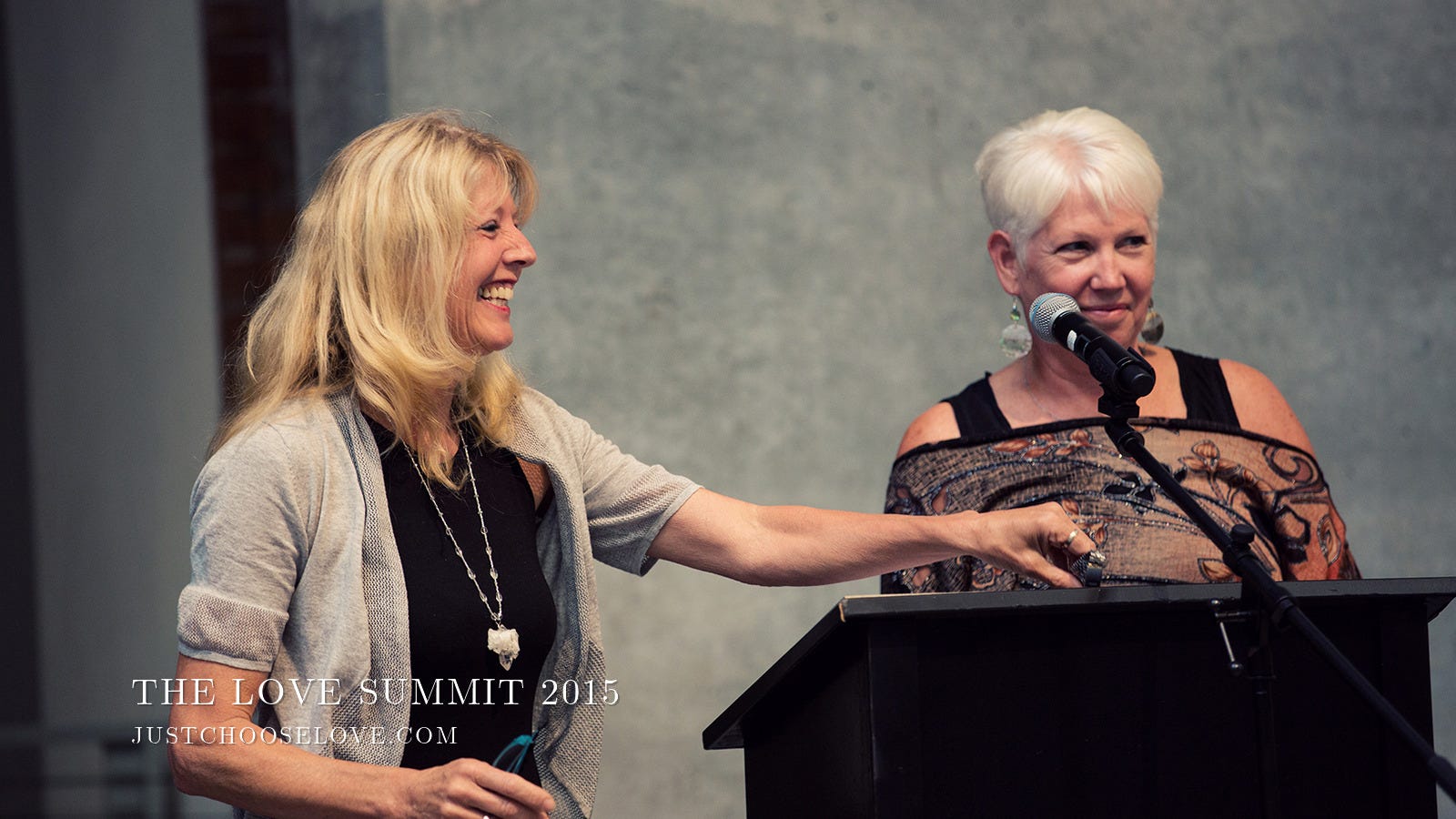
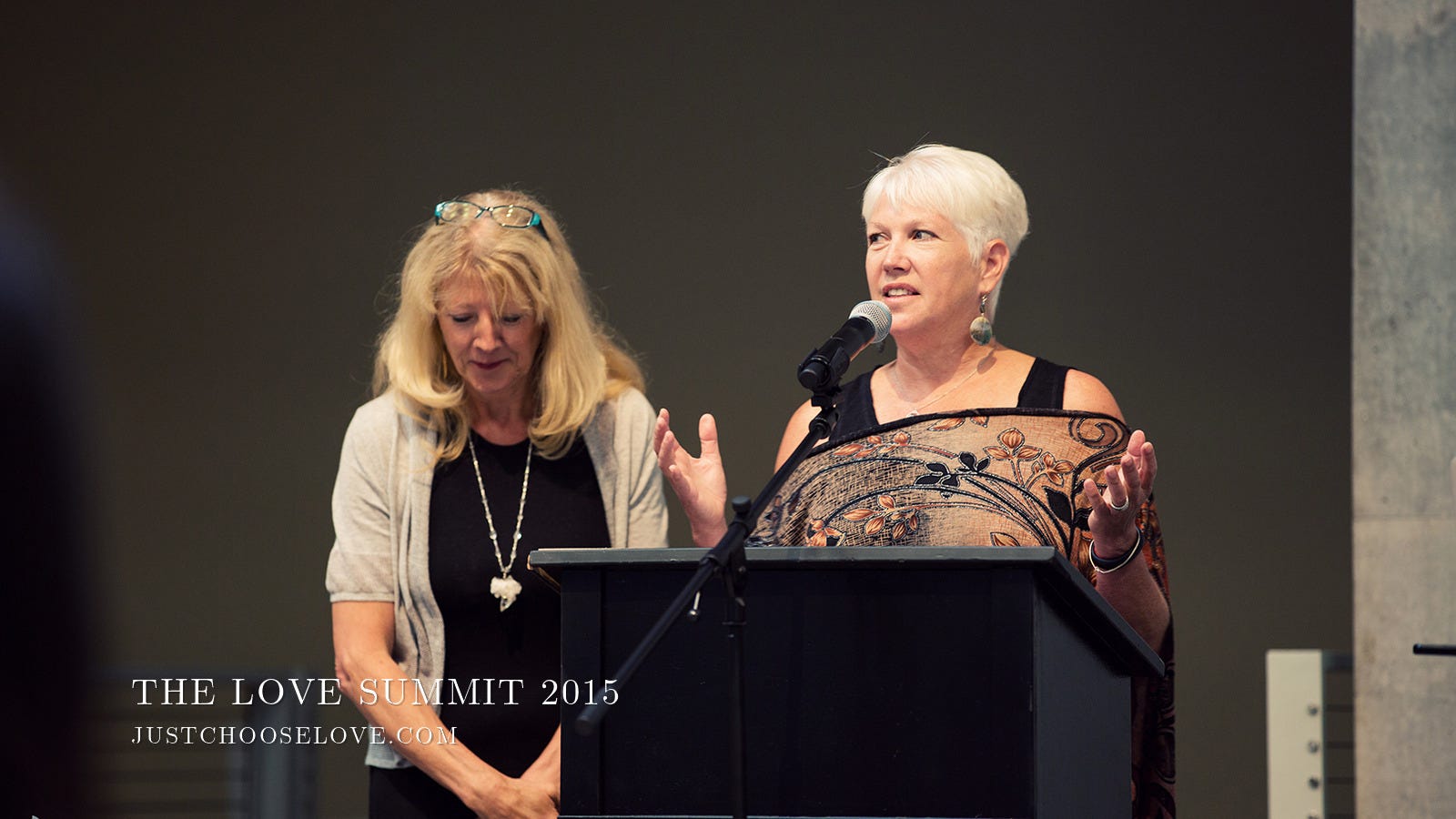
She told this story on a June morning in 2015, at Wieden+Kennedy in Portland, in front of a room full of businesspeople gathered for the first Love Summit. She opened with a passage from the writer William Harmon:
We use the word love when we speak of our family, our friends, our teammates and our sports. But use that word in the boardroom, and people are overwhelmingly overcome by the urge to study the tops of their shoes.
What is it about our work life, Darcy asked, that is so different from the rest of our lives, that we can’t bring love, and love itself, to all of what we do?
Sarah Severn was standing beside her. For the next half hour, the two of them handed the conversation back and forth, one asking and the other answering. Between them, they’d given Nike forty-two years, and for seven of those years they wanted the same thing and couldn’t work together.
It wasn’t a difference in values, and it wasn’t a lack of intelligence or evidence. It was language, and the words they carried into each other’s offices had somehow become barriers between people who were actually trying to move in the same direction.
That’s what makes their story so interesting to me, because the question isn’t simply how to bring more love into our work. It’s what love asks of us when something serious is at stake, when someone’s job or livelihood is involved, when the decisions being made inside an institution have consequences far beyond the people sitting around the table.
We often talk about love as though it belongs in the softer places of life. But what happens when we bring it into power? What happens when we bring it into strategy meetings, product development, and the places where decisions are made that affect other people’s lives?
Sarah and Darcy had to find out, and it took them the better part of a decade.
Do you know what’s in your product?
Sarah had come to Nike by a very different road. She started in market research and advertising in the 1980s, which she described from the stage as being a lot like Mad Men. A contact at Wieden+Kennedy eventually brought her into Nike in Europe, and two years later she was asked to move to Portland to run the Nike Environmental Action Team. She arrived with her husband, her young children, a couple of years of college biology, no formal training in environmental studies, and what she described as a compulsion to make a difference.
So she did what we often do when we know something matters but don’t yet know what to do about it. She found people who knew more than she did: Paul Hawken, Karl-Henrik Robèrt, the Swedish oncologist behind The Natural Step, John Perkins, who would return to this story seventeen years later to open the first Love Summit with me, and Bill McDonough, the architect and green designer who’d been hired to build Nike’s European headquarters.
McDonough called Sarah one day to say that the building was nice, but what he really wanted to talk about was the product. So she brought him into the room. There were about ten people around the table, including the heads of materials and design, Darcy from advanced research and development, and Mark Parker, who would go on to run the company nine years later.
McDonough asked them a simple question: Did they know what was in their product?
Of course they did.
Except they didn’t.
McDonough had run a gas chromatograph on the Air Pegasus, one of Nike’s best-selling running shoes, and he had the analysis with him. Every chemical in that shoe was listed, and every one was there because someone had made a decision about design, materials, manufacturing, or shipping.
Darcy was sitting at that table. She’d spent the year reading about this very thing.
“No,” she said. “We had no idea what was in our shoes.”
April 14, 1997.
She still knows the date.
It’s just stuff
You’d think that was the moment the two of them locked arms. They agreed on nearly everything that mattered. Then they spent seven years getting almost nowhere together.
I keep thinking about that, because it’s so easy from the outside to imagine that when two people care deeply about the same thing, they’ll naturally find their way to one another. But caring isn’t always enough.
Sarah was the one from corporate responsibility, newly arrived from Europe, deeply concerned about the science and eager to move. Darcy had built her entire career making products for some of the best athletes in the world. She’d just learned something unsettling about the things she’d spent her life helping to create, and she hadn’t told many people how she’d learned it.
Sarah would walk into Darcy’s office and say, “This stuff that you’re making.”
That word, stuff, became a trigger for Darcy. She knew Sarah was right. She knew it at the time. But she couldn’t hear the message through the word.
Years later, Sarah looked back on those conversations and offered a different way she might have said it:
I think about how I could have languaged this through love, not judgment. Imagine if I’d walked into Darcy’s office and said, we really do make the most amazing footwear designed to meet athletes’ needs, and we can make it better.
It’s the same message and the same facts, from the same person. The second version doesn’t require Darcy to reject the work she loves in order to hear the truth.
I read that and found myself wondering how often I’ve done some version of the same thing. How often have I had something important to say, but because I was attached to being right, I delivered the truth in a way that made it harder for the other person to receive it? And then walked away believing the problem was that they wouldn’t listen.
Maybe sometimes the problem is the language.
The culture around them wasn’t helping, either. Nike was a highly competitive organization. Individual achievement mattered, standing out mattered, and although the company talked about teamwork, advancement was still tied to being exceptional. Sarah described it as pervasive, even though it wasn’t explicit.
Culture will eat strategy for lunch every day and twice on Friday, she said, giving the familiar phrase her own timing.
Darcy described the same thing through the language of systems. The culture of an organization teaches people what matters. It teaches them what gets rewarded, and it gives them the words through which they understand one another.
Nike’s dominant archetype, in Carol Pearson’s terms, was the Ruler: sovereignty, command and control, being right. Early sustainability language belonged more naturally to the Caregiver. The two were speaking from completely different places, which helps explain why two people who wanted so much of the same thing could spend seven years struggling to hear each other.
Filters over the heart
Underneath the language was fear, and both of them said so from the stage, in front of a room of leaders drawn from a range of industries.
Darcy was the first woman in her role, responsible for research, design and development across roughly two thousand people and forty departments, while also trying to introduce a seven-year change initiative. She was afraid of failing, afraid of putting the business at risk, and afraid of not having all the answers.
The timing mattered, too. Nike’s extraordinary growth had stalled. Revenue was flat, profits were down by nearly half, more than a thousand jobs were cut, and the company’s labor practices were under intense public scrutiny.2 This was the environment in which two executives were asking the company to invest in things whose value might not be visible for years.
Sarah carried a different fear. “The classic not being good enough,” she called it. She was repeatedly told some version of, “You’re in corporate responsibility. You just don’t understand the business.”
Instead of pushing back, she tried to fit in. She tried to become more acceptable to the culture she was trying to change, and she said that, in the process, she was jeopardizing her authentic self.
That’s such a careful phrase. What she was really describing was what can happen when we begin to disappear inside a role.
Then there was Darcy’s boss. He was six foot eight, she said, dominating and unnamed from the stage, although she acknowledged that some people in the room could probably figure it out. One day he called her into his office and said, “Darcy, you need to figure out how to bring all the passion without the emotion to your work.”
She said it still baffles her.
It baffles me too, because what is passion without emotion? And what does it say about a workplace when we’re encouraged to care deeply, but only if our caring doesn’t make anyone uncomfortable?
Consider who he was saying it to. A woman who had lost six pregnancies, whose husband was going through chemotherapy, who’d discovered that the chemistry of the industry she worked in might be connected to both, and who was trying to help the company look at itself.
Bring all the passion.
Leave the emotion at home.
I’ve seen versions of this in so many organizations. Usually the request isn’t actually to care less. It’s to be less visibly moved, to become more polished and controlled, less human. And then we wonder why people have trouble connecting with one another.
This is part of the work I do through Congruence Coaching, alongside the Love Summit. I’m interested in that distance between who we are and who we’ve learned we need to be in order to belong somewhere. It takes enormous energy to maintain that distance, and often the people around us don’t even know why we seem so far away.
Proceed until apprehended
In 1999, Sarah’s team launched an action learning program that Darcy sponsored. They called it Shambhala.
The name comes from a Tibetan Buddhist prophecy Sarah found in Joanna Macy’s World as Lover, World as Self.3 The story is about a time when the world is being laid to waste, and the Shambhala warriors emerge, not to fight an enemy, but to recognize that the forces threatening life arise from our own decisions, our own relationships, and our own ways of living.
They carry two weapons: compassion and wisdom.
Compassion gives you the energy and passion to move, but compassion alone can burn you out.4 Wisdom gives you an understanding of our radical interdependence, and with that understanding, the battle changes. It’s no longer good people against bad people. The line between good and evil runs through the landscape of every human heart.
They brought that way of thinking into Nike. “The guys thought we had finally lost the plot,” Sarah joked.
About a hundred people went through the program, and from it came roughly sixty experiments across the company, all moving under a phrase Sarah and Darcy shared: Proceed until apprehended.
Eventually, they were apprehended. About six months in, the CFO wanted a return on investment for every one of the sixty initiatives.
Darcy later called it one of the best things that happened to them, even though it was deeply challenging. Most of the work was long-term by its nature, and you can’t easily show a quarterly return on changing a social system. Still, the work continued.
Something else happened, too. People left Nike, and they took Shambhala with them. Darcy called it a “genealogy of influence,” and I love that phrase because organizations tend to measure what they lose in terms of headcount. But sometimes what leaves the building isn’t just a person. It’s a way of seeing.
Two weeks in Baja
By 2004, Darcy had taken over Nike’s global women’s business and wanted sustainability built into it from the beginning. Nearly a decade after they first met, Sarah and Darcy were finally working together in earnest. Something had shifted. Both had done a great deal of personal work by then, and both described arriving at a new appreciation for one another.
Then, in 2005, Peter Senge sent Darcy an advance copy of Presence. Inside was an account of a sacred passage in Baja with John Milton of Way of Nature.5 Darcy called Senge to ask how she could reach him. Then she called Sarah and asked whether she wanted to go.
In February 2006, they spent two weeks in Baja, partly together and partly alone. Seven days on the Pacific, about thirty kilometers south of Todos Santos. No music, no books, no journal, a five-day fast.
“Water and yourself,” Darcy said, and everything comes down to what’s around you.
On the fifth day, she knew it was time to leave. She returned to Portland and told the president she was going. He told her to slow down. She went anyway.
Later, she described those twenty-one years at Nike as preparation for the systems work she does now.
Sarah stayed until August 2014. In her final three years, she worked on Nike’s systems innovation team with a general manager who believed there were problems Nike couldn’t solve alone. At his first meeting with the team, he made a commitment to heart-based leadership.
Sarah said you could have knocked her over with a feather.
It was the first time she’d heard anyone at Nike say it.
He later described it this way:
Seeing through fear and competition to the level of vulnerability where we are all equal, where I am you, and you are me.
Sixteen years is a long time to wait for one sentence.
It came from the top, and Sarah was still there to hear it.
What lasted, and what didn’t
Some of what they built lasted. Nike began working with The Natural Step in 1998 and trained hundreds of employees in it over the following years. The Considered Index came out of that work, giving designers a way to think about the environmental footprint of their products and materials.
In 2010, Nike put more than four hundred of its patents into a shared pool so other companies could use them, the same basic impulse that led Judy Wicks to give her competitors her supplier list.6
The patent pool is gone now.
But the product work didn’t disappear with it. Nike reports that 78 percent of what it makes across Nike, Jordan and Converse contains some recycled material. Every Nike Air sole is at least half recycled, and more than ninety percent of the waste from making Air is reused. In 2023, the ISPA line released the Link Axis, a shoe made from interlocking parts with no glue, designed to come apart at the end of its life rather than become waste. Its upper is entirely recycled polyester, and its tooling is made from scrap airbag material.7
Someone inside Nike is still asking McDonough’s question, and getting a better answer than Darcy had to give him in 1997.
The pace is the harder question. Nike is large enough that what it chooses to make, and how it chooses to make it, can influence an entire industry. That’s precisely why the work matters, and precisely why it’s so complicated.
In December 2023, Nike eliminated its Sustainable Innovation team. Some of the sustainability staff were laid off or moved elsewhere, even as the company continued to face the enormous challenge of reducing its environmental footprint.8
I’m not writing Nike off, and I don’t think either Sarah or Darcy would want me to. They each gave twenty-one years of their lives to the company, and when they talk about Nike, what I hear isn’t bitterness. It’s love.
And it’s another form of courage: to love an institution enough to tell the truth about it without needing to make it the villain.
Sarah and Darcy didn’t fail. What they planted outlived their tenures by more than a decade, and the people who went through Shambhala carried that work into other companies, other countries and other systems.
But there’s a lesson in what happened to their team, too. When work like this lives in a department, it can be cut like any other department. When it becomes part of how an organization thinks, it becomes much harder to remove.
That’s why Darcy’s distinction is so important: sustainability isn’t a problem to be solved. It’s a condition to be created. A problem gets a budget, a deadline, a team and eventually, perhaps, a reason to dissolve the team. A condition asks something different of all of us.
Take it somewhere you love
Near the end of the talk, Sarah and Darcy asked the room to put down their phones and close their eyes. I want to hand this to you the way they handed it to us.
Try it now, wherever you’re reading this.
Bring to mind a challenge you’re dealing with right now, something urgent that’s yours to help solve. It can be at work or at home. Notice what happens in your body when you bring it to mind. Notice the words, the images and the story you’re carrying about it.
And then set it down.
Breathe.
Take yourself somewhere in nature that you love, a place where you feel restored. Stay there for a few minutes, long enough to feel your appreciation for it. Then, from inside that feeling, bring the challenge back and look at it again.
Does it look different?
Is there something you can see now that you couldn’t see before?
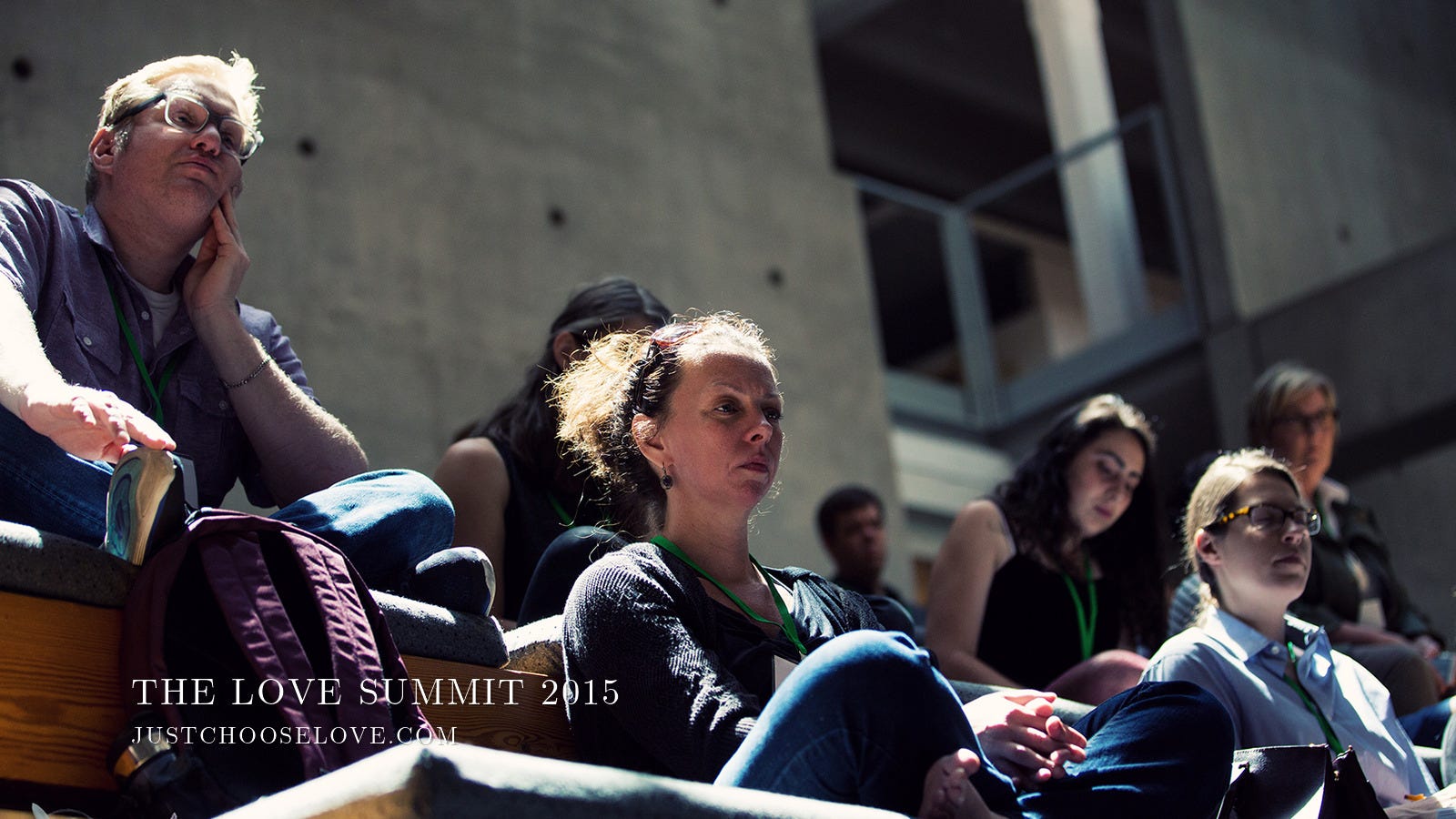
I was surprised to hear this offered in a corporate auditorium, not as a nice idea, but as a way of working.
Darcy described the difference between a problem-solving orientation and a creative one. When we’re solving a problem, we can become reductive. We narrow our attention around what’s wrong. But when we orient toward creating a future, we begin to see possibilities. We’re not the same person in that space.
Sarah’s frame was simpler. There are two basic emotions, she said: love and fear. Everything else is some variation of one or the other.
It sounds like the kind of thing you might say at a Love Summit. And it is. But by 2015, there was research behind some of it. Researchers Sigal Barsade and Olivia O’Neill had spent sixteen months studying what they called companionate love in a long-term care facility. Where affection, care and compassion were stronger, employees were more satisfied, more committed and more accountable, while patients experienced better outcomes too.9
“So it’s not out there anymore,” Sarah said.
Love at work was no longer simply an idea. There was evidence.
Sarah also quoted the Chilean biologist Humberto Maturana, who wrote that love, allowing the other to be a legitimate other, is the only emotion that expands intelligence.10 A legitimate other, in his terms, is someone you don’t need to change in order to be with.
Put that beside Darcy sitting in her office with her defenses up, unable to hear Sarah because of one word, and suddenly the whole story becomes something more than a story about sustainability.
It becomes a story about what happens to our intelligence when we stop making the other person wrong.
Sarah and Darcy came out of those years with three lessons:
Check your ego at the door and partner, because this work is too big to own.
Take everything you’re passionate about seriously, except yourself.
Know what you love. Know what you want to conserve. And put everything you’ve got into that.
That last one gets me.
Know what you love.
Not what you think you should love. Not what will make you look good. Not what your organization rewards. What you really, truly love.
That’s where the work begins.
Remember what Sarah said at the beginning, about the deep love the two of them have for each other now.
They got there.
It took seven years of misunderstanding, a clash over one word, a program named for Tibetan warriors, a CFO asking for a return on investment, two weeks in Baja and a lifetime of becoming more fully themselves.
But they got there.
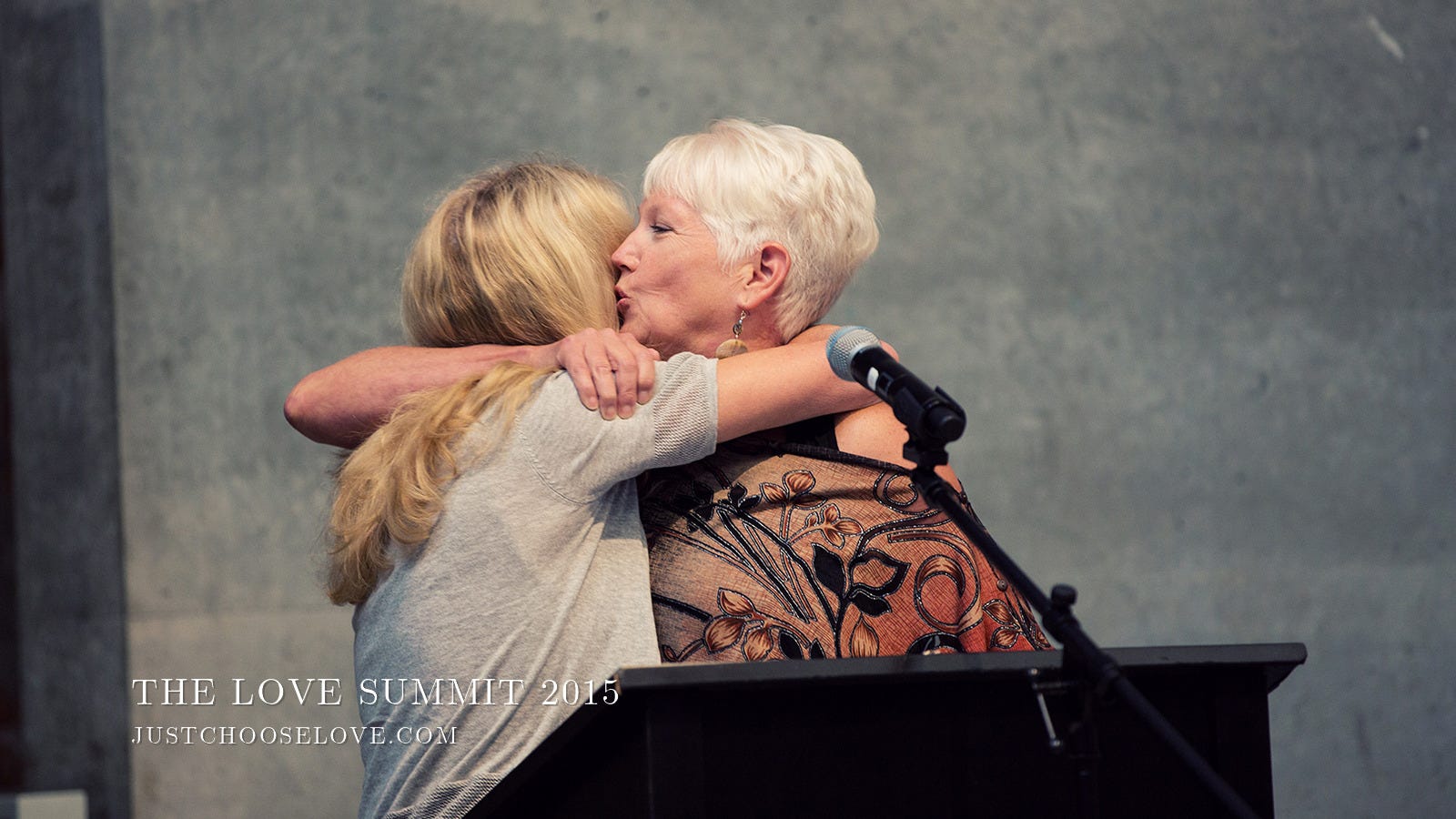
Darcy closed the talk by thanking Dan Wieden and the agency whose building they were sitting in for Just Do It, which she said really had made a difference. Then she turned to Sarah.
“And to you,” she said.
“Love you.”
That might be my favorite part.
Not because it’s sentimental, but because after everything, the science, the strategy, the culture, the power, the fear, the seven lost years, they arrived somewhere much simpler.
They loved each other.
They always had.
They just had to learn how to let that love into the room.
And that’s the part of their story that belongs to all of us.
Most of us have a version of those seven years somewhere in our lives. A person at work, a partner, a friend, a parent, someone who may be telling us something we need to hear but whose voice we’ve decided not to trust. Or someone who stopped hearing us a long time ago.
Maybe the question isn’t whether you’re right.
Maybe the question is what becomes possible when you stop needing to be.
If you had to say it again tomorrow, to the one person who most needs to hear it from you, what would it sound like if it came through love rather than judgment?
And what might become possible if they could finally hear you?
Take care.
Watch the talk: Sarah Severn and Darcy Winslow, The Language of Love, Love Summit 2015.
Earlier in this series: Freddy Ehlers, the Secretary of Good Living · Alper Utku on power and love · Judy Wicks and the supplier list she gave away · Dr. Victor Strecher on asking what they love
The Love Summit returns in 2027. We’re building a year-round community around one question: how do we practice love inside structures of power? If you want to be part of it, or you know someone who belongs in these conversations, email me directly: Samantha@justchooselove.com.
About Sarah Severn. Sarah Severn spent twenty-one years at Nike, joining its European brand marketing team after thirteen years in advertising and moving to world headquarters in Oregon in 1995 as global director of the Nike Environmental Action Team. Her last role was senior director of stakeholder partnerships in Nike’s sustainable business and innovation group, where she helped form the BICEP climate policy coalition and the Zero Discharge of Hazardous Chemicals coalition. She founded Sarah Severn Consulting in 2014 and advises organizations on leadership for sustainability and climate change.
About Darcy Winslow. Darcy Winslow spent twenty-one years at Nike in senior roles across the business and the Nike Foundation, including global director of research, design and development, general manager of global women’s footwear, apparel and equipment, and founder of the company’s Sustainable Business Strategies group in 1999. She founded DSW Collective in 2008 and co-founded the Academy for Systems Change, where she was founding president from 2010 to 2020. She founded Magnolia Moonshot 2030, which mobilizes women leaders on climate.
A note on how this was made: I worked with Claude to organize the transcript, check the research, and draft this piece. The judgment about what to keep is mine. I include this note because I’d rather you know how a piece was built than wonder. There's more on how Love Summit essays are made on my About page.
Living Downstream. Sandra Steingraber, Living Downstream: An Ecologist Looks at Cancer and the Environment (Addison-Wesley, 1997).
Nike in 1998. Revenues of $9.6 billion, net income down 49.8 percent, a $129.9 million restructuring charge and about 1,039 jobs eliminated. Nike, Inc. fiscal 1998 annual report, management discussion and analysis.
The Shambhala warriors. Joanna Macy's retelling of the twelve-hundred-year-old Tibetan prophecy appears in World as Lover, World as Self (Parallax Press, 1991).
Compassion and burnout. Macy’s warning that compassion alone can burn you out has a close analogue in the research, though the vocabulary is inverted. Tania Singer and Olga Klimecki distinguish empathy, resonating with another’s suffering, from compassion, which they describe as feeling for rather than feeling with. Empathic distress produces negative feeling and withdrawal, and chronic exposure to it is what tends to burn people out. Compassion, in their account, does the opposite, activating prosocial motivation and building positive affect and resilience. Singer and Klimecki, “Empathy and Compassion,” Current Biology 24(18), 2014.
Presence. Peter Senge, C. Otto Scharmer, Joseph Jaworski and Betty Sue Flowers, Presence: Human Purpose and the Field of the Future (SoL, 2004; Doubleday, 2005). Jaworski’s account of his sacred passage with John Milton of Way of Nature appears there.
What they built. Nike began working with The Natural Step in 1998 and trained hundreds of employees through 2001, producing the Considered Index. The patent pool was GreenXchange, launched at Davos in January 2010 with Creative Commons and Best Buy; Nike listed more than four hundred patents on it. The platform is no longer operating.
Where Nike is now. Nike’s own sustainability targets page reports that 78 percent of Nike, Jordan and Converse products contain some recycled material, that all Nike Air soles are at least 50 percent recycled and more than 90 percent of Air manufacturing waste is reused, and that materials account for roughly 70 percent of the company’s carbon footprint. The ISPA Link Axis, released in September 2023, is assembled from interlocking components with zero glue and is designed to be taken apart; its Flyknit upper is 100 percent recycled polyester and its tooling is made from recycled airbag scrap.
What came after. Sharon Lerner, “Nike Laid Off Sustainability Staff Even as Its Emissions Rose”, ProPublica, July 2024.
Love at work. Sigal Barsade and Olivia O’Neill, “What’s Love Got to Do with It? A Longitudinal Study of the Culture of Companionate Love and Employee and Client Outcomes in a Long-Term Care Setting”, Administrative Science Quarterly 59:4 (2014). Their Harvard Business Review piece, “Employees Who Feel Love Perform Better”, ran in January 2014.
Love and intelligence. Maturana co-developed the theory of autopoiesis with Francisco Varela. The claim comes from his biology of cognition rather than from an experiment. See Maturana and Gerda Verden-Zöller, The Origin of Humanness in the Biology of Love (Imprint Academic, 2008).
I really hope and can't wait until you are able to put together another conference like this one together!!! This resonates so much with my current work on Small Business Financing and the David vs. Goliath battle between Main Street vs. Wallstreet.